Sunnyquilt: A Cozy SVG Color Font for Handmade Designs
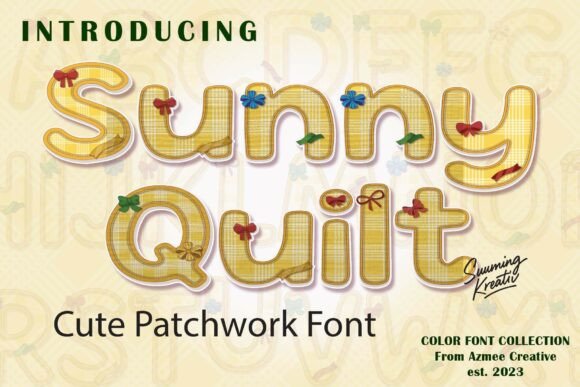
There’s something undeniably comforting about a handmade quilt—the intricate patches, the visible stitching, the sense that every piece was chosen with care and stitched with love. That same warmth and character are now available in your typography toolbox with Sunnyquilt, an SVG color font that captures the essence of cozy patchwork in every letterform.
Unlike standard typefaces that deliver flat, uniform characters, Sunnyquilt brings a three-dimensional, textured quality to your text. Each letter features decorative elements like tiny bows, delicate ribbons, and realistic stitch effects that mimic the look of actual fabric crafts. The result is a typeface that feels personal, inviting, and full of personality—perfect for projects where you want to evoke a handmade, artisanal aesthetic without spending hours creating it from scratch.
Why Texture and Detail Matter in Modern Design
In a digital landscape saturated with clean, minimalist sans-serif fonts and sleek geometric typefaces, a textured display font like Sunnyquilt stands out precisely because it breaks the mold. Visual texture creates emotional resonance. When viewers see stitch effects and fabric-inspired details, it triggers associations with comfort, nostalgia, and authenticity—qualities that are increasingly valuable for brands trying to build genuine connections with their audiences.
Consider the difference between a baby shower invitation set in a standard script font versus one rendered in Sunnyquilt. The quilted texture immediately communicates care, celebration, and a handmade touch. For small business owners selling handmade goods, nursery décor, or children’s products, this kind of visual shorthand can be incredibly powerful. It tells your audience what your brand is about before they read a single word of copy.
Practical Applications Across Creative Projects
The versatility of a premium font like Sunnyquilt extends far beyond a single use case. Designers, crafters, and entrepreneurs can integrate this typeface into a wide range of projects:
- Branding and Logo Design: For businesses in the children’s product space, handmade goods market, or artisan food industry, Sunnyquilt can serve as the foundation of a brand identity that feels warm and approachable. Use it for wordmarks, taglines, or accent text in combination with a clean sans serif font for body copy.
- Packaging Design: Product labels, hang tags, and box designs benefit enormously from textured typography. A quilted font on a package of homemade cookies or handmade candles reinforces the artisanal quality of what’s inside.
- Social Media Graphics: Instagram posts, Pinterest pins, and Facebook headers featuring Sunnyquilt immediately catch the eye in a feed full of generic text overlays. The colorful, detailed lettering stops the scroll and invites engagement.
- Print Materials: Greeting cards, invitations, posters, and flyers all become more memorable when set in a typeface with this much personality. Birthday party invitations, baby announcements, and holiday cards are natural fits.
- Digital Products and Marketing Assets: Ebook covers, worksheet headers, course materials, and email graphics can all benefit from a display font that adds visual interest without overwhelming the content.
- Merchandise and Sublimation: T-shirt designs, tote bags, mugs, and stickers featuring Sunnyquilt lettering have a built-in charm that appeals to gift buyers and craft enthusiasts alike.
Matching Typography to Your Project Goals
Choosing the right font style is about more than aesthetics—it’s about alignment with your message and audience. Sunnyquilt works best as a display font or headline typeface. Its detailed texture makes it ideal for short bursts of text: titles, headers, logos, and accent phrases. For longer paragraphs or body copy, pairing it with a simpler serif font or sans serif font ensures readability while maintaining visual contrast.
Here’s a practical approach to testing font pairings:
- Set your headline in Sunnyquilt and your body text in a neutral typeface like a clean sans serif or a classic serif.
- Check the contrast in size, weight, and texture. You want the headline to command attention without competing with the body text.
- Test the combination at different sizes. A pairing that looks great on a desktop screen might not translate well to a small sticker or a large poster.
- Print a test version if your project is print-based. Screen rendering and print output can look quite different, especially with textured fonts.
Readability is always a consideration with decorative typefaces. Because Sunnyquilt includes detailed stitch effects and color fills, it performs best at larger sizes where those details are visible and legible. Avoid using it for fine print, legal text, or anywhere your audience needs to process information quickly.
Compatibility and Workflow Integration
One of the practical advantages of Sunnyquilt as an SVG color font is its broad compatibility with popular design tools. Whether you work in Adobe Illustrator, Adobe Photoshop, Canva, Cricut Design Space, or Silhouette Studio, you can incorporate this typeface into your existing workflow without major technical hurdles.
For crafters using cutting machines, the SVG compatibility is particularly valuable. You can create cut files with the quilted texture intact, which opens up possibilities for layered vinyl projects, paper crafts, and heat transfer designs. Content creators working in Canva will appreciate being able to drop the font directly into social media templates and digital product designs.
It’s worth noting that SVG color fonts render differently across platforms. In some applications, you’ll see the full color and texture. In others, you may see a simplified outline version. Testing your design in the specific software where it will be finalized is always a smart move.
Building Brand Recognition Through Distinctive Typography
Visual consistency is one of the cornerstones of effective brand identity. When your audience sees the same typeface, color palette, and design elements repeatedly across your touchpoints—website, social media, packaging, print materials—they begin to associate those visual cues with your brand. A distinctive creative font like Sunnyquilt accelerates that recognition because it’s inherently memorable.
Think about brands you recognize instantly by their typography alone. That level of recognition doesn’t happen by accident. It comes from deliberate, consistent choices. If your brand personality aligns with warmth, playfulness, and handmade quality, Sunnyquilt can become a signature element of your visual identity.
That said, balance is key. Using a textured display font for every piece of text in your materials would be overwhelming. Reserve it for high-impact moments—your logo, key headlines, featured product names—and let supporting typography handle the rest. This approach creates a hierarchy that guides your audience’s attention and keeps your designs feeling polished rather than cluttered.
Licensing and Commercial Use Considerations
Before incorporating any font into commercial projects, reviewing the licensing terms is essential. Most premium fonts come with specific guidelines about how they can be used—whether for personal projects, commercial products, or both. Some licenses cover unlimited commercial use, while others may have restrictions on the number of end products or the types of media where the font can appear.
For entrepreneurs and small business owners, understanding these terms upfront prevents headaches later. If you’re creating products for sale—whether physical merchandise, digital downloads, or client work—make sure your license covers that use. When in doubt, reach out to the font creator or distributor for clarification.
Sunnyquilt’s design makes it particularly well-suited for commercial applications in the handmade goods market, children’s products, and crafting communities. If those are your primary areas of business, investing in a font that aligns so closely with your aesthetic is a strategic decision that can pay dividends across multiple projects and product lines.
The beauty of a typeface like this is that it bridges the gap between the handmade look your customers love and the scalable efficiency your business needs. You get the warmth of handcrafted design without the time investment of creating every element by hand—and in a competitive market, that kind of efficiency matters.